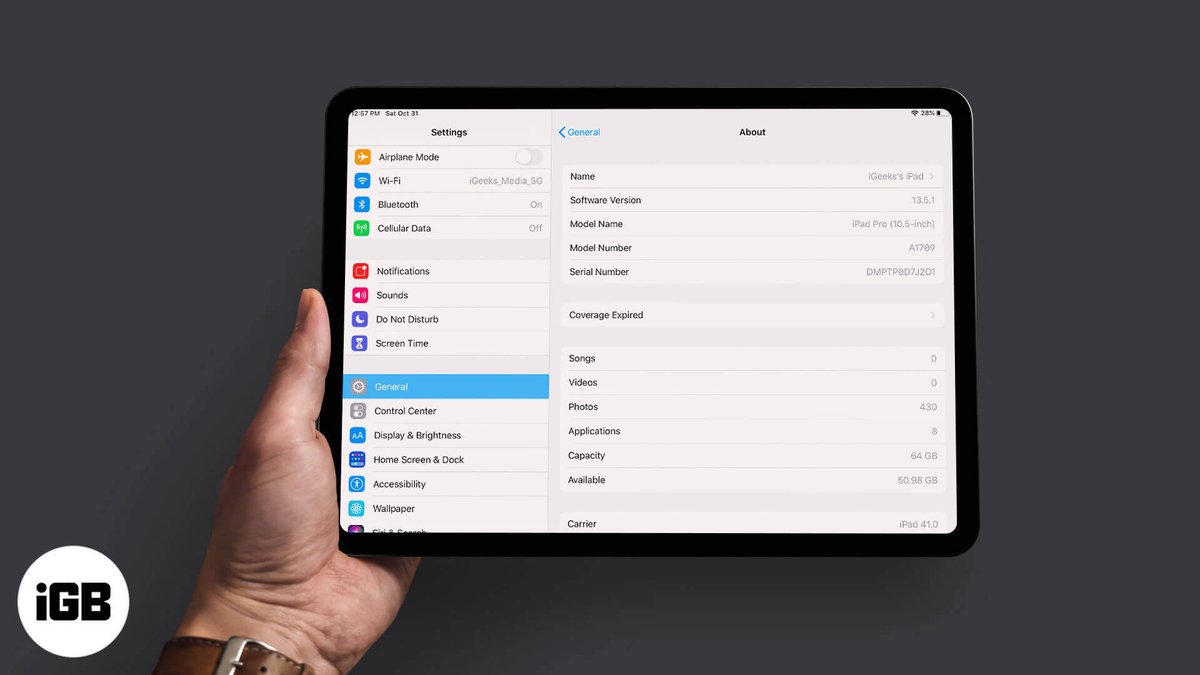
It's easy to feel lost in the labyrinth of Apple's product names, especially when trying to pinpoint the exact identity of your iPad. Is it an Air, a Pro, a mini, or just a plain old "iPad"? And what generation is it, anyway? This isn't just a quest for trivial knowledge; successfully Decoding iPad Model Names and Generation Numbering is your secret weapon for unlocking crucial information about your device, from its compatible accessories to its software update lifespan and even its resale value.
Think of it like this: knowing your iPad's specific model and generation is like having its DNA. It tells you everything you need to know about its capabilities, limitations, and future potential. Without this vital piece of information, you're essentially flying blind when it comes to upgrades, repairs, or buying that perfect Apple Pencil.
At a Glance: Your Quick Guide to iPad Identity
- The "A" Number is King: Your iPad's unique model number starts with an "A" (e.g., A1234) and is the definitive identifier.
- Find It Two Ways: Either through the Settings app on a working iPad or printed on the back of any iPad.
- Why It Matters: Crucial for figuring out compatible accessories, which iPadOS versions it supports, assessing upgrade needs, and determining resale value.
- Generations Vary: Different iPad lines (iPad, Air, mini, Pro) have their own generation counts.
- Lookup Tables Are Your Friend: Once you have the "A" number, a quick search will tell you everything.
Why This Decoding Quest Matters More Than You Think
Before we dive into the "how," let's spend a moment on the "why." You might be thinking, "It's just an iPad, who cares about its generation?" But trust us, the seemingly small detail of an "A" number or generation count can have significant real-world implications that impact your user experience and wallet.
Imagine you're trying to buy a new Apple Pencil. Did you know there are two distinct generations of the Apple Pencil, and each works with specific iPad models? Or perhaps you're eyeing a sleek Magic Keyboard, only to find out it's incompatible with your iPad's generation. This is where the model number saves you from costly mistakes and frustrating returns.
Beyond accessories, knowing your iPad's lineage is vital for understanding its longevity. Every year, Apple releases a new version of iPadOS, bringing fresh features and security enhancements. But older iPads eventually reach an "end-of-life" for software updates, meaning they won't receive the latest iPadOS updates. Identifying your generation helps you predict when your device might be approaching this threshold, informing your decision on when it’s time to upgrade.
Furthermore, if you're planning to sell or trade in your device, potential buyers or retailers will always ask for the exact model and generation. This information directly influences its market value and your ability to get the best price for reselling your current model. From troubleshooting issues to understanding performance limitations, this single piece of data is the foundation of effective iPad management.
Cracking the Code: Two Reliable Ways to Find Your iPad's Model Number
The good news is that finding your iPad's identity isn't a scavenger hunt. Apple has made it straightforward, providing two primary methods to unearth that all-important model number.
Method 1: The "Settings" Sleuth (When Your iPad is Working)
This is the most common and often easiest way to identify your iPad, provided it's powered on and functional.
- Open Settings: Tap the familiar gray gear icon on your iPad's Home screen.
- Navigate to General: In the left-hand menu, scroll down and tap "General."
- Tap "About": This section holds a treasure trove of information about your device.
- Find "Model Name" and "Model Number":
- You'll likely see a Model Name first, such as "iPad Air (5th generation)" or "iPad Pro (12.9-inch) (6th generation)." This gives you a good descriptive start, but it's not the unique identifier we need for precise lookups.
- Directly below or near the Model Name, you'll see Model Number. This usually starts with an "M" (e.g., MD785LL/A). This "M" number is a part number that can vary by region or configuration (like storage size).
- The Critical Step: Tap on the "M" Model Number. It will instantly transform into the specific "A" number we're after (e.g., A1489). This "A" number is unique to your iPad's specific generation and connectivity type (Wi-Fi only vs. Wi-Fi + Cellular).
Method 2: The "Back of the Device" Blueprint (When Your iPad Won't Power On)
Sometimes, your iPad might be unresponsive, or perhaps you're looking at a device that doesn't belong to you. No problem! Apple cleverly stamps the essential model information directly onto the hardware itself.
- Flip Your iPad Over: Gently turn the device to its back.
- Locate the Small Print: Underneath the iconic Apple logo, you'll find a block of very small text.
- Spot the "Model" Label: Look for the word "Model" followed by a short alphanumeric code. This code will begin with an "A" (e.g., A1584). This is your unique "A" number, identical to the one you'd find in the Settings app.
This method is incredibly useful for iPads that are damaged, have forgotten passcodes, or simply won't turn on, providing an infallible way to identify the hardware.
Beyond the "A": How to Identify Your iPad's Specific Generation
Once you have that elusive "A" number, you're halfway there. The next step is to translate that cryptic code into a meaningful iPad generation. Apple maintains detailed lookup tables on its support website, which are the most reliable source for this information.
These tables are typically organized by the main iPad categories:
- iPad: The standard, entry-level models.
- iPad Air: The mid-range option, balancing power and portability.
- iPad mini: The compact, pocket-friendly version.
- iPad Pro: The high-performance, professional-grade tablets.
To use these tables effectively:
- Navigate to Apple's Support Site: A quick search for "identify your iPad model" will usually lead you directly to the relevant Apple support page.
- Use Search Function: On the webpage, use your browser's search function (Command + F on Mac, Ctrl + F on Windows/Linux) and type in your "A" number. The page will highlight where your model number appears.
- Note the Corresponding Generation: Next to your "A" number, the table will clearly state the specific iPad model and its generation (e.g., "iPad Air (5th generation)").
This process takes mere seconds and definitively tells you which iPad you own. For a more detailed walkthrough, you can consult our guide on How to find iPad generation.
The iPad Family Tree: A Quick Overview of Generations
Apple launched its first iPad in 2010, effectively kicking off the modern tablet era. Since then, the ecosystem has expanded dramatically, with Apple introducing over 25 different models across various generations to cater to diverse user needs and budgets. Understanding the broad strokes of each line helps contextualize your specific model.
As of the latest releases (with no new iPads introduced in 2023), here's a snapshot of the iPad family:
- Standard iPad Line: This is the original, mainstream iPad, designed for everyday use, education, and general media consumption.
- Apple has released 10 generations of the standard iPad.
- The newest model is the iPad (10th generation), launched in 2022.
- iPad Air Line: Positioned as a more powerful and premium option than the standard iPad, but not quite as feature-packed as the Pro. It's known for its thinner design and more advanced chipsets, offering a great balance of performance and portability.
- There have been 5 generations of the iPad Air.
- The latest is the iPad Air (5th generation), also from 2022.
- iPad mini Line: As its name suggests, this is Apple's compact iPad, perfect for one-handed use, reading, and portability. Despite its size, recent generations pack a serious punch.
- The iPad mini has seen 6 generations.
- The iPad mini (6th generation), last refreshed in 2021, is the current model.
- iPad Pro Line: The pinnacle of Apple's tablet technology, the iPad Pro is designed for professionals and demanding users, featuring powerful processors, advanced displays (like ProMotion and Liquid Retina XDR), and high-end camera systems. It comes in two primary screen sizes: 11-inch and 12.9-inch.
- Both the 11-inch and 12.9-inch iPad Pro models have gone through multiple iterations. The 12.9-inch model has seen 6 generations, while the 11-inch model has had 4 generations.
- The most recent Pro models, launched in 2022, are the iPad Pro 12.9-inch (6th generation) and the iPad Pro 11-inch (4th generation).
In total, across all lines, Apple has released a staggering 27 distinct generations of iPads, showcasing a continuous evolution of design, power, and capability over more than a decade.
Why Generation Matters: Real-World Impacts
Understanding your iPad's generation isn't just about categorizing it; it's about making informed decisions that affect your everyday interaction with the device.
Accessory Compatibility: The Right Fit for Your Gear
This is perhaps the most immediate and tangible impact of knowing your iPad's generation. Not all Apple accessories are universally compatible.
- Apple Pencil: There are two generations of Apple Pencil. The Apple Pencil (1st generation) charges via Lightning and works with older iPads (up to the 9th gen standard iPad) and some iPad Air/Pro models. The Apple Pencil (2nd generation) charges magnetically and works exclusively with newer iPad Air, iPad mini, and iPad Pro models. Trying to use the wrong one simply won't work, and you might even damage a port! Knowing your generation ensures you pick the compatible accessories you need.
- Keyboards: Smart Keyboards and Magic Keyboards are size- and model-specific. An iPad Air (4th generation) uses a different Smart Keyboard Folio than an iPad Pro 12.9-inch (6th generation), despite both offering keyboard functionality. These accessories are a significant investment, so matching them correctly is paramount.
- Cases and Covers: Even basic cases are designed to fit the exact dimensions, button placements, and camera cutouts of a specific iPad generation. A case for an iPad (9th generation) won't fit an iPad (10th generation) due to differing screen sizes and button layouts.
iPadOS Compatibility: Staying Current with Software
Apple's commitment to software updates is a major selling point, but every device eventually reaches its limit.
- Feature Access: New iPadOS versions introduce exciting features. For example, Stage Manager, a multitasking feature, requires iPads with M-series chips or A12X/A12Z Bionic chips. Older iPads simply can't handle the processing demands.
- Security Updates: Beyond new features, major iPadOS updates include critical security patches. Running an outdated OS can leave your device vulnerable.
- Supported Models for iPadOS 17: As of its release, iPadOS 17 supports:
- iPad Pro (10.5-inch and all newer models from 2017 onwards).
- iPad Air (3rd generation and later).
- iPad mini (5th generation and later).
- iPad (6th generation and later).
If your iPad falls outside these categories, it will remain on an older, unsupported version of iPadOS.
Performance & Features: What Your iPad Can (and Can't) Do
Each successive generation of iPad brings improvements in processing power, display technology, camera capabilities, and more.
- Processor Speed: Newer iPads feature faster Bionic or M-series chips, enabling smoother multitasking, demanding games, and professional-grade applications. An iPad Pro with an M2 chip will significantly outperform an older iPad Air (3rd generation) in tasks like video editing.
- Display Technology: Features like ProMotion (adaptive refresh rate), Liquid Retina XDR (for stunning HDR content), and True Tone (adjusting color based on ambient light) are often generation-specific.
- Camera Capabilities: Advancements in cameras, like Center Stage (which keeps you in the frame during video calls) or improved low-light performance, are typically found in newer models.
Resale & Trade-in Value: Getting Your Money's Worth
When it's time to part with your iPad, its generation is the primary factor determining its market value.
- Depreciation: Like cars, electronics depreciate. Newer generations hold their value better. An iPad (10th generation) will fetch a significantly higher price than an iPad (6th generation), even if both are in pristine physical condition.
- Buyer Demand: Newer models are more desirable due to their longer support life, better performance, and compatibility with the latest accessories.
- Retailer Offers: Apple and other retailers base their trade-in offers almost entirely on the specific model and generation number. Knowing yours helps you manage expectations and negotiate effectively.
Navigating the Upgrade Maze: When is it Time for a New iPad?
Given the rapid pace of technological advancement, it's natural to wonder when your current iPad has run its course. Knowing your generation is the key to answering this question confidently.
Here are some signs it might be time to consider an upgrade:
- No More iPadOS Updates: If your iPad is no longer supported by the latest iPadOS version, you'll miss out on new features, security enhancements, and potentially app compatibility. This is a strong indicator that its useful life is waning.
- Lagging Performance: Apps are slow to open, multitasking is a chore, or games stutter frequently. Older chips simply can't keep up with modern software demands.
- Accessory Incompatibility: You want to use a new accessory (like the Apple Pencil 2 or Magic Keyboard) but your iPad isn't compatible, forcing you to use older, less capable alternatives.
- Battery Degradation: While batteries can be replaced, an older iPad might not justify the repair cost if its overall performance is also suffering.
- Lack of Essential Features: You find yourself wishing for features only available on newer models, such as Center Stage for video calls, a better camera, or a more vibrant display.
When evaluating an upgrade, consider your specific needs. Are you a casual user who primarily browses the web and watches videos? An older, but still supported, iPad might be perfectly fine. Are you a digital artist, student, or professional who relies on demanding apps? Then staying closer to the cutting edge with an iPad Air or Pro might be a better investment. Remember, Apple didn't release any new iPads in 2023, making the 2022 models the current standard for the time being.
Common Questions and iPad Model Mysteries Solved
Even with the instructions above, a few common questions and misconceptions often pop up. Let's clear those up.
"Is the 'M' number important?"
While the "M" number (the initial Model Number in Settings) is part of Apple's internal part numbering system, it's not the unique identifier you need for public lookups. The "M" number can vary based on region, color, and storage capacity, even for the same generation of iPad. Always tap it to reveal the "A" number; that's the one you'll use to pinpoint the exact generation.
"Does storage size affect the model number?"
No, the "A" model number identifies the generation and connectivity type (Wi-Fi only vs. Wi-Fi + Cellular) of your iPad. It does not reflect the storage capacity (e.g., 64GB, 256GB, 1TB). Storage size is a separate specification. So, an iPad Air (5th generation) with 64GB Wi-Fi will have the same "A" number as an iPad Air (5th generation) with 256GB Wi-Fi.
"Where can I find a definitive lookup table for all 'A' numbers?"
The absolute best and most trustworthy source is Apple's official support website. Search for "identify your iPad model" on support.apple.com, and you'll find comprehensive, up-to-date lists for all iPad lines. Third-party sites can be helpful, but Apple's own documentation is the authoritative source.
"My iPad says 'iPad' but no generation number. What gives?"
Older iPad models, particularly the very first few generations of the standard iPad, didn't always have a generation number explicitly labeled in their Model Name (or sometimes not even on the back in an easily readable format). For these, the "A" model number found on the back of the device or in the About section of Settings is even more critical. Once you have that "A" number, the lookup tables will quickly tell you its generation. For example, an "A1219" is the original iPad (1st generation).
"I have a Wi-Fi + Cellular model. Does that change the 'A' number?"
Yes, it does! For a specific generation of iPad, there will typically be two distinct "A" numbers: one for the Wi-Fi-only model and another for the Wi-Fi + Cellular model. This distinction is important for repairs (different internal components) and for understanding its network capabilities. Always make sure to note whether your "A" number corresponds to the Wi-Fi or Wi-Fi + Cellular variant when performing a lookup.
Your Next Step: Armed with Your iPad's Identity
You've made it! By understanding the nuances of Decoding iPad Model Names and Generation Numbering, you're no longer just an iPad owner; you're an informed iPad owner. You now possess the knowledge to confidently identify your device, understand its place in Apple's ecosystem, and make smart decisions about its future.
So, go ahead:
- Check Your iPad: Use either the Settings app or the back-of-device method to find your iPad's unique "A" model number.
- Look It Up: Head over to Apple's support pages or use your preferred search engine to find the exact generation corresponding to your "A" number.
- Empower Yourself: Now that you know precisely what you have, you can confidently shop for compatible accessories, determine its current iPadOS update status, estimate its resale value, or simply understand its performance capabilities better.
This isn't just about a string of numbers; it's about making the most of your Apple investment. Embrace the power of knowledge, and let your iPad serve you better.