Ever found yourself staring at your iPad, wondering if it's a "Pro," an "Air," or just a "plain" iPad, and more importantly, which generation it actually is? You're not alone. It's a common conundrum, especially when you're trying to figure out if it's compatible with the latest iPadOS update, need to buy the right accessory, or simply want to know its true value. Fortunately, identifying your iPad generation through iPad Settings is straightforward, and we're here to guide you through it, step by digital step.
Knowing your iPad's exact model and generation isn't just about satisfying curiosity. It's practical knowledge that impacts everything from app compatibility and performance expectations to repair options and resale value. Let's peel back the layers and uncover the secrets your iPad holds.
At a Glance: Key Takeaways
- The Model Number is King: Your iPad's unique "Axxxx" model number is the definitive identifier.
- Settings is Your First Stop: The easiest way to find this number is usually through the Settings app.
- Alternatives Exist: If your iPad isn't working, you can find the model number on the back of the device, via a computer, or even from your purchase history.
- Generations Matter: The generation dictates software updates, accessory compatibility (like Apple Pencil models), and overall hardware capabilities.
- Don't Guess: Rely on the concrete "Axxxx" code rather than vague physical characteristics.
Why Your iPad's Generation Matters (More Than You Think)
Before we dive into the "how-to," let's quickly touch on why this information is so valuable. It might seem like a minor detail, but your iPad's generation is a critical piece of data that can save you time, money, and frustration.
- Software Compatibility: Is your iPad still getting the latest iPadOS updates? Older generations eventually lose support, meaning you'll miss out on new features and security enhancements. This directly impacts which apps you can run and how well they perform.
- Hardware Limitations & Performance: Newer iPads boast faster processors, better cameras, and more advanced displays. Knowing your generation helps you understand what your device is capable of, managing expectations for demanding tasks like video editing or graphic design.
- Accessory Purchases: Ever bought an Apple Pencil only to discover it's not compatible with your iPad? Or a case that doesn't fit? Different generations support different accessories (e.g., Apple Pencil 1st gen vs. 2nd gen, various Smart Keyboards), and knowing your model prevents costly mistakes.
- Repair and Support: When something goes wrong, Apple Support or an authorized repair shop will need your model number to diagnose issues and provide the correct parts or service.
- Resale Value & Upgrading: If you're looking to sell your old iPad or trade it in for a newer model, accurately identifying its generation is crucial for getting a fair price. Buyers will also want to know exactly what they're getting.
Understanding these implications makes the effort of finding your generation well worth it. It’s the first step in truly knowing your device, much like finding out what generation is my iPad for any user.
The Definitive Method: Identifying Your iPad Generation Through iPad Settings
For most users, the quickest and most reliable way to pinpoint your iPad's identity is directly through its own software. This method works perfectly if your iPad is functional and you can access the home screen.
Here’s exactly how to do it:
- Open the Settings App: Look for the gray gear icon on your iPad's home screen. Tap it to open.
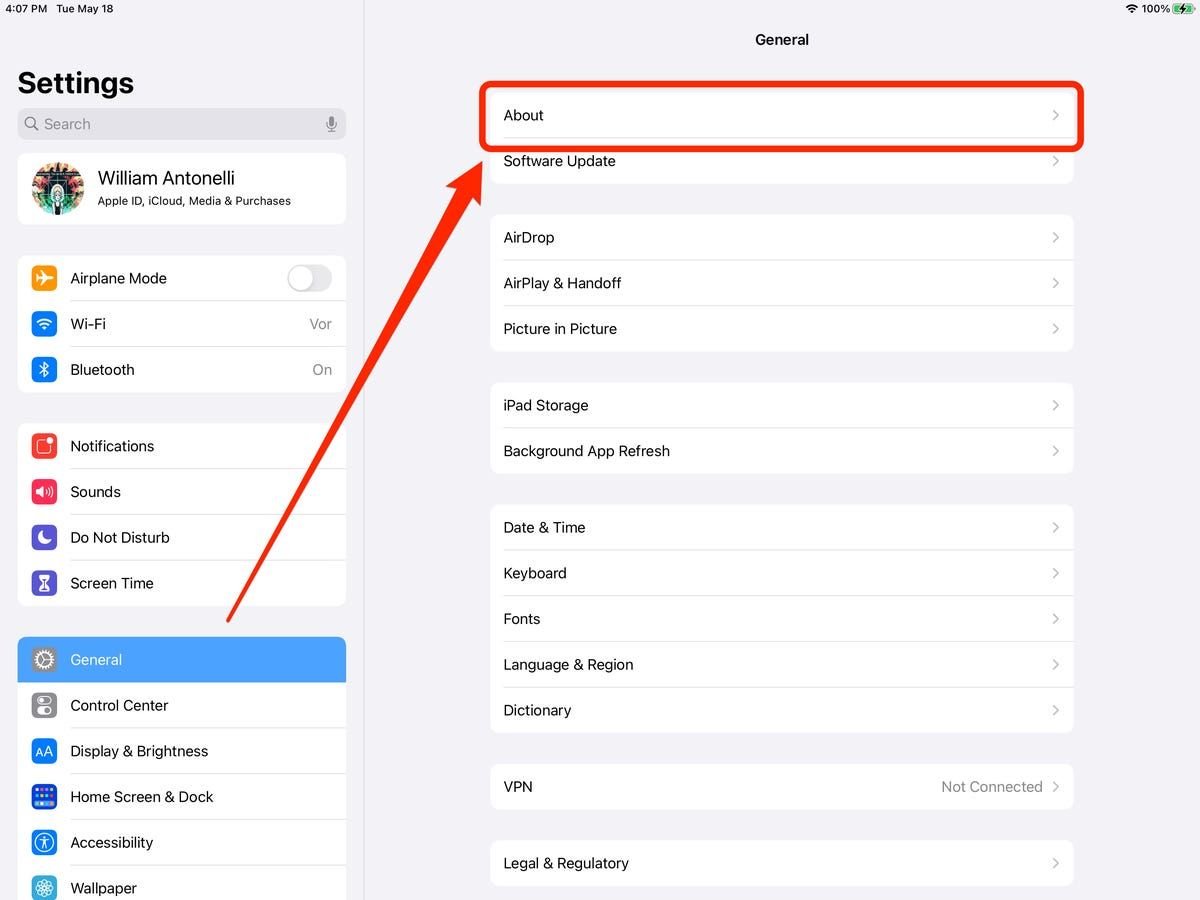
- Navigate to "General": In the left-hand sidebar (or near the top of the main screen if you're in portrait mode), scroll down and tap on "General."
- Tap "About": This is where all the crucial device information lives. Tap on "About."
- Locate the "Model Number": On the "About" screen, you'll see a line labeled "Model Number." Initially, it might display a longer, alphanumeric code (e.g., "MG2F3LL/A"). This isn't the model number we need for identification.
- Tap to Reveal the "Axxxx" Code: Crucially, tap on that longer model number. It will instantly switch to display a shorter code starting with the letter "A" followed by four digits (e.g., "A1822"). This is your iPad's unique model number.
- Write It Down: Make a note of this "Axxxx" number. This is the key to unlocking your iPad's generation in the tables below.
Once you have this "Axxxx" code, you're just moments away from definitively knowing your iPad's generation and type.
No Power? No Problem: Alternative Ways to Find Your iPad's Model Number
What if your iPad isn't booting up, or the screen is broken? Don't worry, Apple has thought of that. There are several other reliable ways to find that elusive "Axxxx" model number, ensuring you're never left guessing.
Checking the Back of Your iPad
This is often the go-to method when the iPad is unresponsive.
- Flip Your iPad Over: Turn the device face down.
- Look for Small Print: Near the bottom of the back casing, underneath the prominent "iPad" branding or Apple logo, you'll find very small, engraved text.
- Find "Model Axxxx": Within this text, you'll see the word "Model" followed directly by the "Axxxx" code. It's usually alongside other information like its serial number and regulatory compliance.
This method works for every iPad ever made, making it incredibly reliable for non-functional devices.
Using a Computer with Finder or iTunes
If your iPad can still connect to a computer, you can leverage Apple's desktop software to identify it.
- For Mac (macOS Catalina or later):
- Connect your iPad to your Mac using a USB cable.
- Open Finder.
- In the Finder sidebar, under "Locations," select your iPad.
- In the main Finder window, click the "General" tab. You'll see your iPad's model name and model number displayed there. You might need to click the model number to toggle to the Axxxx format.
- For Windows PC (or older macOS with iTunes):
- Connect your iPad to your PC using a USB cable.
- Open iTunes.
- Click the small device icon in the upper-left corner of the iTunes window (it looks like an iPad).
- In the "Summary" tab, you'll find your iPad's model name and number. Again, you might need to click the model number to see the Axxxx format.
This method is handy if you're already plugged into your computer or if the back engraving is worn off.
Reviewing Purchase History or Original Receipt
Sometimes, the simplest solution is to go back to the source.
- Original Receipt: Your physical or digital receipt from Apple or an authorized retailer will almost always list the specific model name and number of the iPad you purchased.
- Apple ID Account: If you purchased directly from Apple, log into your Apple ID account on their website. Navigate to your purchase history, and you should find details about your past device purchases, including the model.
- Carrier or Retailer Account: If you bought your cellular iPad through a carrier or a major electronics retailer, check your account history with them.
This can be a lifesaver if the iPad is completely lost or destroyed, but you still need its specifics for insurance or administrative purposes.
Decoding the Axxxx: Your Complete Guide to iPad Generations
Now that you have your "Axxxx" model number, it's time to translate it into a specific iPad generation. Apple organizes iPads into several distinct families: the standard iPad, iPad mini, iPad Air, and iPad Pro. Each family has multiple generations, often released years apart.
Find your "Axxxx" number in the tables below to identify your exact model and generation.
The Classic iPad (Standard) Series
This is Apple's most popular and affordable iPad line, known for its versatility.
| Model Number(s) | iPad Model | Year Released |
|---|---|---|
| A1219, A1337 | iPad (1st gen) | 2010 |
| A1395, A1396, A1397 | iPad (2nd gen) | 2011 |
| A1416, A1430, A1403 | iPad (3rd gen) | Early 2012 |
| A1458, A1459, A1460 | iPad (4th gen) | Late 2012 |
| A1822, A1823 | iPad (5th gen) | 2017 |
| A1893, A1954 | iPad (6th gen) | 2018 |
| A2197, A2200, A2198 | iPad (7th gen) | 2019 |
| A2270, A2428, A2429, A2430 | iPad (8th gen) | 2020 |
| A2602, A2604, A2603, A2605 | iPad (9th gen) | 2021 |
| A2696, A2757, A2777, A3162 | iPad (10th gen) | 2022 |
The Portable Powerhouse: iPad mini Generations
The iPad mini offers full iPad functionality in a compact, highly portable form factor.
| Model Number(s) | iPad Model | Year Released |
|---|---|---|
| A1432, A1454, A1455 | iPad mini (1st gen) | 2012 |
| A1489, A1490, A1491 | iPad mini 2 (2nd gen) | Late 2013 & early 2014 |
| A1599, A1600 | iPad mini 3 (3rd gen) | Late 2014 |
| A1538, A1550 | iPad mini 4 (4th gen) | Late 2015 |
| A2133, A2124, A2126, A2125 | iPad mini (5th gen) | 2019 |
| A2567, A2568, A2569 | iPad mini (6th gen) | 2021 |
The Mid-Range Marvel: iPad Air Generations
Balancing performance and price, the iPad Air offers a sleek design with more power than the standard iPad.
| Model Number(s) | iPad Model | Year Released |
|---|---|---|
| A1474, A1475, A1476 | iPad Air (1st gen) | Late 2013 & early 2014 |
| A1566, A1567 | iPad Air 2 (2nd gen) | Late 2014 |
| A2152, A2123, A2153, A2154 | iPad Air (3rd gen) | 2019 |
| A2316, A2324, A2325, A2072 | iPad Air (4th gen) | 2020 |
| A2588, A2589, A2591 | iPad Air (5th gen) | 2022 |
The Professional's Choice: iPad Pro Generations
Designed for demanding tasks, the iPad Pro line features advanced displays, powerful processors, and professional-grade cameras. Note the screen size variations within the Pro line.
| Model Number(s) | iPad Model | Year Released |
|---|---|---|
| A1584, A1652 | iPad Pro (12.9-inch) (1st gen) | 2015 |
| A1673, A1674, A1675 | iPad Pro (9.7-inch) (1st gen) | 2016 |
| A1701, A1709, A1852 | iPad Pro (10.5-inch) (1st gen) | 2017 |
| A1670, A1671, A1821 | iPad Pro (12.9-inch) (2nd gen) | 2017 |
| A1980, A2013, A1934, A1979 | iPad Pro (11-inch) (1st gen) | 2018 |
| A1876, A2014, A1895, A1983 | iPad Pro (12.9-inch) (3rd gen) | 2018 |
| A2228, A2068, A2230, A2231 | iPad Pro (11-inch) (2nd gen) | 2020 |
| A2229, A2069, A2232, A2233 | iPad Pro (12.9-inch) (4th gen) | 2020 |
| A2377, A2459, A2460, A2301 | iPad Pro (11-inch) (3rd gen) | 2021 |
| A2378, A2461, A2462, A2379 | iPad Pro (12.9-inch) (5th gen) | 2021 |
| A2759, A2761, A2762, A2435 | iPad Pro (11-inch) (4th gen) | 2022 |
| A2436, A2437, A2766, A2764 | iPad Pro (12.9-inch) (6th gen) | 2022 |
Beyond the Numbers: Visual Cues & Quick Checks
While the "Axxxx" model number is the undeniable truth, certain external characteristics can offer quick clues, especially if you're trying to roughly estimate an iPad's age or series without powering it on. Think of these as helpful hints, not definitive proof.
- The Home Button: Older standard iPads and iPad minis, as well as the first few generations of iPad Air and Pro, feature a physical Home button with Touch ID. Newer models (iPad Air 4th gen and later, iPad mini 6th gen, and most iPad Pro models from 2018 onwards) have moved to an edge-to-edge display and rely on Face ID or Touch ID integrated into the power button, thus lacking a physical Home button.
- Charging Port:
- Lightning Port: Most standard iPads (up to 9th gen), iPad minis (up to 5th gen), and iPad Airs (up to 3rd gen) use Apple's proprietary Lightning port.
- USB-C Port: Newer iPads (iPad 10th gen), iPad Air (4th gen and later), iPad mini (6th gen), and most iPad Pro models (from 2018 onwards) have transitioned to the universal USB-C port. This is a significant visual differentiator.
- Camera System:
- Single Rear Camera: Most older iPads and standard models will have a single rear camera.
- Dual Rear Cameras (Wide & Ultra Wide) + LiDAR Scanner: This advanced setup is characteristic of iPad Pro models from 2020 onwards, often found in a square camera bump.
- Display Size and Bezel Thickness: While less precise, the overall screen size (e.g., small for mini, larger for Pro 12.9-inch) and the thickness of the bezels (thinner bezels generally indicate a newer model) can offer broad hints.
These visual clues can help you narrow down the possibilities, but always confirm with the "Axxxx" model number for absolute certainty.
Common Questions About iPad Generations
We've covered the how-to, now let's address some of the most frequently asked questions about iPad generations.
How many iPad generations are there in total?
Across all product lines (standard iPad, mini, Air, and Pro), there are a total of 27 distinct generations! This includes:
- 10 generations of the standard iPad
- 6 generations of iPad mini
- 5 generations of iPad Air
- 6 generations of iPad Pro
This extensive lineage highlights Apple's continuous innovation in the tablet space.
What are the newest iPad models available?
As of 2023, Apple did not release any new iPads. The latest models launched in 2022 include:
- iPad Pro 12.9-inch (6th Generation)
- iPad Pro 11-inch (4th Generation)
- iPad Air (5th Generation)
- iPad (10th Generation)
The iPad mini (6th generation) was last refreshed in 2021. So, if you're eyeing the cutting edge, these are the devices to consider.
Which iPads are supported by iPadOS 17?
Staying up-to-date with the latest operating system is vital for features and security. iPadOS 17 supports a broad range of devices, specifically:
- iPad Pro: All models.
- iPad Air: 3rd generation or later.
- iPad (Standard): 6th generation or newer.
- iPad mini: 5th generation or later.
The oldest iPad model explicitly supported by iPadOS 17 is the iPad Pro (10.5-inch) released in 2017. If your iPad falls outside these categories, it will continue to run the highest iPadOS version it's compatible with, but won't receive future major updates.
Your iPad, Identified: What's Next?
Congratulations! You've successfully identified your iPad's generation. This seemingly small piece of information opens up a world of understanding about your device. Now that you know precisely what you have, here are some actionable next steps:
- Check Compatibility: Look up the exact specifications of your model online. Confirm which Apple Pencil, Smart Keyboard, or other accessories are compatible. No more guessing games!
- Evaluate Upgrade Options: If your iPad is older and no longer receiving software updates, or if its performance is lagging for your needs, you now have the clear data required to research potential upgrades.
- Assess Resale Value: If you're considering selling your iPad, having the correct generation and model number will allow you to get accurate quotes and list it correctly, attracting the right buyers.
- Troubleshoot More Effectively: Should you encounter any issues, providing the exact model number to support forums or Apple's service desk will streamline the troubleshooting process significantly.
Your iPad is a powerful tool, and understanding its identity is the first step toward maximizing its potential and making informed decisions about its future.