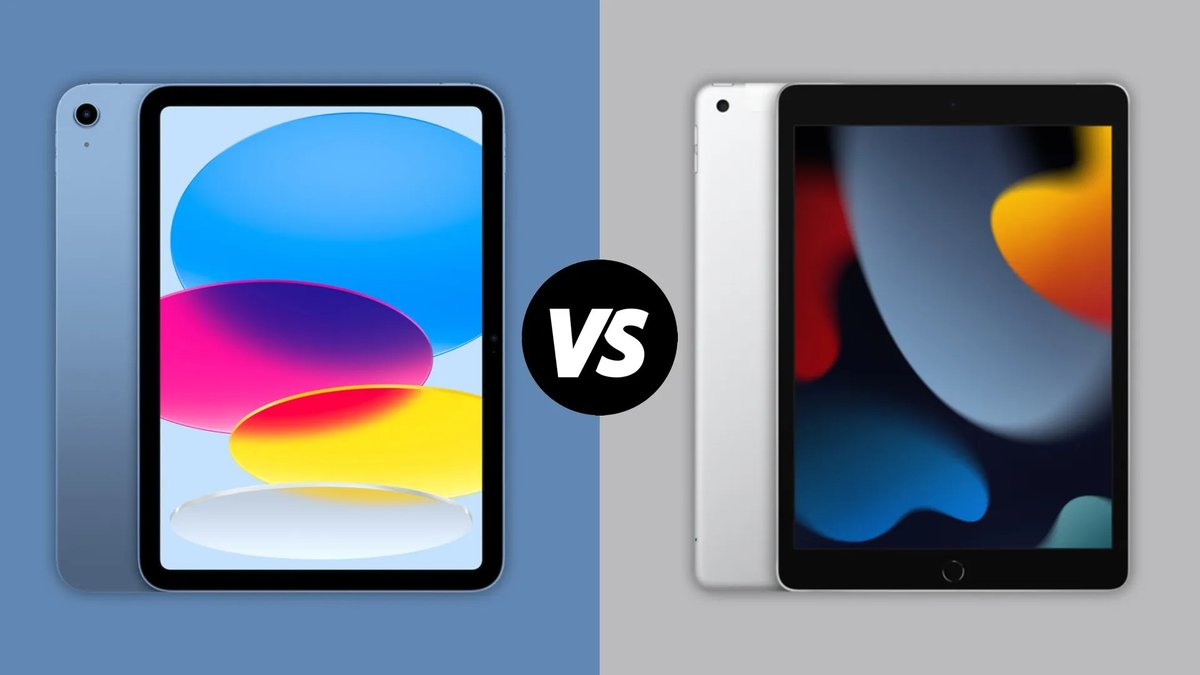
Ever picked up an iPad case online, only to find it doesn't quite fit? Or maybe you're wondering why your friend's Apple Pencil works perfectly with their tablet, but yours just... doesn't connect. These common frustrations often boil down to one critical, yet frequently overlooked detail: knowing your iPad's specific generation. It's not just about bragging rights for the latest model; understanding your iPad's lineage is fundamental to its functionality, compatibility, and even its lifespan.
Think of it like knowing the make, model, and year of your car. You wouldn't buy a spare part for "a Ford" without knowing if it's a Focus, F-150, or a Mustang, let alone its specific year and trim. Your iPad is no different.
At a Glance: Why Your iPad's Generation Matters
- Accessory Compatibility: Ensures you buy the correct Apple Pencil, keyboard, case, or charger.
- Software Updates: Determines if your device can run the latest iPadOS features and security patches.
- Performance & Features: Tells you about the internal chip, screen technology, camera quality, and overall speed.
- Resale Value: A critical factor in determining how much you can sell your used iPad for.
- Troubleshooting & Support: Helps Apple Support or repair shops identify your device quickly.
- Upgrade Decisions: Informs you when it might be time to consider a newer model.
The Model Mystery: Why 'iPad' Isn't Enough
Apple's branding, while brilliant, can sometimes be a little... broad. You might have an "iPad," but is it an iPad Air, an iPad mini, an iPad Pro, or one of the standard numbered iPads? And beyond that, which generation is it? A 2nd generation iPad Air is vastly different from a 5th generation iPad Air, despite sharing the "Air" moniker.
This is where the unique model number comes into play. While model names (like "iPad Air") can apply to multiple generations, your iPad's specific model number—always starting with an "A" followed by four digits (e.g., A2316)—is its unique identifier. It's the precise code that unlocks all the details about its manufacturing year, specifications, and capabilities. Without it, you're essentially guessing.
Your iPad's Model Number: The Key to Everything
Before you can unlock the secrets of your iPad's generation, you need to find its unique model number. This is surprisingly straightforward, whether your device is working or not.
If Your iPad Is Functional:
- Open the Settings App: Tap the grey gear icon on your home screen.
- Navigate to General: In the left-hand menu, scroll down and tap "General."
- Tap About: This section contains all the nitty-gritty details about your device.
- Find the Model Number: You'll see "Model Number" listed. Initially, it might show a marketing-friendly model number (like MXXXXLL/A). Tap this string of numbers and letters, and it will change to the concise, unique identifier starting with "A" (e.g., A2316). This "A" number is what you need.
If Your iPad Won't Turn On:
Don't despair! Apple thoughtfully prints this crucial information directly on the device itself.
- Flip Your iPad Over: Look at the back of the device.
- Locate the Small Print: Underneath the iconic Apple logo, you'll find a few lines of tiny text.
- Spot "Model": One of these lines will clearly state "Model" followed by the familiar "A" and four digits. This is your model number.
Once you have this "AXXXX" model number, you can easily compare it with comprehensive lists available on Apple's official support website. A quick search usingCommand + F(on a Mac) orCtrl + F(on Windows) on these pages will pinpoint your exact model and generation. For additional confidence, cross-reference details like the year of release, screen size, or specific features. And if you're ever truly stuck, Apple Support can help identify your device using either the model or serial number. For a more detailed walkthrough, you can always find your iPad's generation with specific instructions.
Decoding the Digits: What Your Generation Tells You
Knowing your iPad's generation isn't just an academic exercise; it's a practical necessity that impacts how you use and interact with your device every single day.
The Right Fit: Accessory Compatibility
This is arguably the most common reason people need to know their iPad's generation. Accessories aren't universal, and buying the wrong one is a frustrating waste of money and time.
- Apple Pencil: This is a big one. The original Apple Pencil (1st generation) charges via Lightning and works with older iPads. The Apple Pencil (2nd generation) magnetically attaches and charges on the side of newer, flat-edged iPads. Then there's the Apple Pencil (USB-C), which also charges via USB-C and offers a different set of features and compatibility. Your iPad's generation dictates which, if any, Pencil it supports.
- Keyboards & Cases: iPad dimensions have changed subtly over the years, even within the same screen size. Speaker placement, camera cutouts, and button locations shift. Cases designed for an 8th generation iPad won't fit a 10th generation iPad due to differing dimensions and the 10th-gen's horizontal front camera. Keyboard cases, especially those using Apple's Smart Connector, are hyper-specific, as the Smart Connector's location varies by model.
- Charging Cables & Ports: While many iPads still use Apple's proprietary Lightning port, newer models—especially iPad Pros, iPad Airs, and the 10th generation standard iPad—have adopted USB-C. This affects what chargers and adapters you need.
Staying Current: Software Updates & Longevity
Every iPad generation is built with specific hardware, particularly its central processing unit (CPU). This hardware dictates how long Apple can reasonably support the device with new software updates.
- iPadOS Support: Each major iPadOS release introduces new features that often require more processing power or specific hardware components. If your iPad is too old, it simply won't be able to run the latest operating system. For example, iPadOS 17, released in 2023, requires an iPad Pro (10.5-inch) from 2017 or newer. This also extends to standard iPads (6th generation or newer), iPad Air (3rd generation or later), and iPad mini (5th generation or later).
- Security Patches: While older iPads might stop receiving major feature updates, Apple often continues to release critical security updates for a period afterward. However, eventually, even these cease. Knowing your generation helps you gauge how long your device will remain fully protected against the latest digital threats.
- App Compatibility: As apps update to take advantage of newer iPadOS features, they might eventually drop support for older operating system versions. This means an older iPad might not be able to run the latest versions of your favorite apps.
The Power Under the Hood: Performance & Features
Beyond updates and accessories, your iPad's generation fundamentally defines its capabilities.
- Processor Power: This is perhaps the most significant differentiator. Older iPads use A-series chips, while newer iPad Pros and Airs feature powerful M-series chips (like the M1 or M2). A device with an M-series chip will handle demanding tasks like video editing, graphic design, and advanced gaming far better than an older iPad.
- Display Technology: Screen quality has evolved dramatically. You'll find standard Retina displays, Liquid Retina displays, and the stunning Liquid Retina XDR displays on top-tier Pro models. Features like ProMotion (adaptive refresh rates for smoother scrolling) and True Tone (automatic white balance adjustment) are also generation-specific.
- Camera Systems: From basic front and rear cameras to advanced multi-lens systems with LiDAR scanners on Pro models, the camera capabilities vary widely by generation.
- Storage Options: While not generation specific in terms of the model itself, the available storage tiers have increased over time. Knowing your generation helps you understand the maximum storage you could have purchased for that model.
Future-Proofing & Value: Resale and Upgrades
If you're planning to sell your iPad or considering an upgrade, its generation is paramount.
- Resale Value: Newer generations command significantly higher prices on the used market. Buyers will always want to know the exact generation to understand its age, performance, and expected lifespan. An iPad from 2022 will fetch a much better price than one from 2018.
- Upgrade Decisions: Knowing your current iPad's generation helps you evaluate if an upgrade is truly worthwhile. If your current model is still receiving updates and performing well, you might hold off. If it's falling behind on software, struggling with performance, or no longer supports the accessories you need, it's a clear signal to consider a newer model.
The iPad Family Tree: A Quick Overview
Apple's iPad lineup has expanded significantly over the years, offering choices for every need and budget. In total, there are 10 generations of the standard iPad, 5 generations of iPad Air, 6 generations of iPad mini, and 6 generations of iPad Pro. That's a grand total of 27 distinct generations, each with its own nuances!
Here’s a quick snapshot of the families and their recent updates:
- Standard iPad: The workhorse, balancing price and performance. The newest is the iPad (10th Generation), launched in 2022, which brought a design refresh and USB-C to the entry-level lineup.
- iPad Air: A step up in performance and design from the standard iPad, lighter and often with better screens. The latest is the iPad Air (5th Generation), also from 2022, featuring the powerful M1 chip.
- iPad mini: The compact powerhouse, perfect for portability. The iPad mini (6th Generation), last updated in 2021, received a complete design overhaul.
- iPad Pro: The flagship models, designed for professionals, boasting the most powerful chips, advanced displays, and best camera systems. The newest are the iPad Pro 12.9-inch (6th Generation) and iPad Pro 11-inch (4th Generation), both released in 2022.
Interestingly, Apple did not release any new iPads in 2023, making the 2022 and 2021 models their most current offerings. This pause sometimes makes identifying the "latest" a bit less straightforward, further emphasizing the need for generation knowledge.
Common Questions & Misconceptions
Let's clear up a few common confusions about iPad generations.
"My iPad is old; can I still use it?"
Absolutely! Even if your iPad no longer receives the latest iPadOS updates, it can still be a perfectly functional device for many tasks. It might be great for streaming video, browsing the web, reading ebooks, or running older versions of apps. The key is to manage expectations about performance and new features.
"Does my iPad's color or storage capacity matter for its generation?"
No, not directly for the generation itself. An iPad Pro 11-inch (3rd Generation) is the same generation whether it's Space Gray or Silver, and whether it has 128GB or 1TB of storage. These are configurable options within a specific generation, not determinants of the generation itself. However, storage capacity will significantly impact its resale value.
"Can I upgrade my iPad's internal hardware to a newer generation?"
Unfortunately, no. Unlike some desktop computers, iPads are sealed units with all components (processor, RAM, storage) soldered onto the logic board. You cannot upgrade the CPU, add more RAM, or increase internal storage after purchase. An upgrade to a newer generation means buying a new iPad.
Beyond Identification: Taking Action with Your Knowledge
Once you know your iPad's generation, you're empowered to make smarter decisions.
- Smart Shopping: When buying accessories online, always filter by your specific iPad model and generation. This simple step will save you countless returns and frustrations.
- Informed Upgrades: If your current iPad is struggling with the latest apps or no longer supports your desired accessories, you have the data to research an appropriate upgrade path. You can compare your current model's specs against newer generations to see where you'll get the most significant improvements.
- Troubleshooting & Repairs: When seeking support from Apple or a third-party repair shop, providing your exact model and generation speeds up the process significantly. They'll know precisely what components your device has and what repair options are available.
- Maximizing Value: When it's time to sell, accurately listing your iPad's generation and model number will help you attract serious buyers and achieve a fair price.
Knowing your iPad's generation isn't just about technical trivia. It's about protecting your investment, ensuring compatibility, and unlocking the full potential of your device. Take a few moments to identify your iPad's specific model number, and you'll be well-equipped for years of seamless iPad use.